
Ustica
The island of Ustica is well known for its Marine Protected Area and its scuba diving. But even though it’s just a small island in the heart of the Tyrrhenian Sea, Ustica has so much more to offer: history, culture, geology and nature!
Must-see spots during your holiday in Ustica, Sicily
The history of Ustica begins around 740,000 years ago, when the island was born. Faults in the Earth’s crust triggered underwater volcanic eruptions, creating two volcanic centers that rose above the sea surface: Monte Guardia dei Turchi and Monte Costa del Fallo. In a later phase, a third volcanic eruption occurred, forming the Falconiera cliff, whose crater is still easily recognizable today.
To the Greeks, Ustica was known as “Osteodes”, or island of bones, because of the human remains from a Carthaginian deportation of mercenaries who died of hunger and thirst on the island. But the name Ustica comes from the Roman “Ustum”, meaning burnt, due to its black volcanic rocks.
The first human presence on the island of Ustica dates back to the Neolithic period. The remains of the prehistoric village near the Faraglioni of Ustica in the Tramontana area date back to the Bronze Age. Numerous terracotta artifacts and other Neolithic and Bronze Age tools have been found on the island of Ustica, which can now be admired at the Archaeological Museum of Ustica.
From the 3rd century BC, the Romans ruled the island of Ustica. On the hills of Falconiera lie the remains of the Roman town and its necropolis. Many Greek, Carthaginian and Roman archaeological finds have been discovered in this area, and these too can be admired at the Archaeological Museum of Ustica.
Many remains from these eras have also been found underwater. The bay of Cala Santa Maria and Spalmatore formed natural harbors of the island of Ustica. Indeed, Roman anchors can still be admired during dives in these areas. One of the most recent discoveries, made only last year, is a Roman ship that still appears intact and lies at a depth of 70 meters right off Cala Santa Maria.
With the fall of the Roman Empire, the island lived through a very quiet period for a few hundred years.
From the 8th to the 11th century, Ustica was under Saracen control. The Normans then took control and built the Church of S. Maria and the Benedictine Monastery. These structures were destroyed when the Saracens regained control of the island in the 14th century.
Attempts to achieve stable colonization of the island of Ustica failed due to continuous pirate attacks and raids that it suffered. It was only in the 18th century, under Bourbon rule, that the repopulation of the island of Ustica was encouraged by a law offering free farmland and tax exemption to families who moved to Ustica. The island was thus colonized by a large group of farmers. They suffered several attacks by the Turks, who plundered the island. As a result, stronger defenses were built, which can still be admired today, such as the Falconara fortress, the Santa Maria tower and the Spalmatore tower.
In the early 20th century, the island of Ustica began to be used as a prison, where criminals and political prisoners were exiled. During the fascist period in Italy, opponents of Mussolini were exiled to the island, the most famous being the communist member of parliament Antonio Gramsci.
The small island of Ustica is a natural oasis surrounded by crystal-clear, unspoiled waters, and it’s definitely worth a visit for any nature lover. There are numerous hiking trails from which you can enjoy a unique panoramic view over fields, wooded hills and the deep blue of the Mediterranean Sea. The island’s volcanic origins created numerous caves, some accessible from the coast and others that can be visited on boat tours booked directly at the port of Ustica.
Enjoy the sea and go snorkeling, explore the Natural Pools at the foot of one of Ustica’s lighthouses. Or choose to relax quietly on Cala Sidoti beach or on the pebble beach of the Acquario in Ustica.
Discover the most interesting stories of Ustica by taking part in one of the fascinating excursions offered on the island. Between history, archaeology, geology, nature tours and astronomical excursions, you won’t be able to stop listening to the fascinating facts and stories of the island of Ustica!
Don’t miss the enchanting sunsets over the sea while enjoying a great aperitivo listening to live music at the lighthouse!
And of course, for diving lovers, the island of Ustica is the best there is!
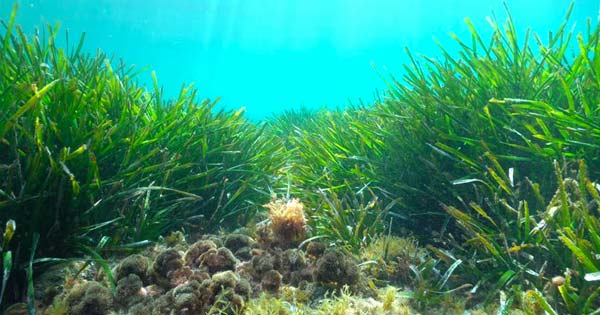
Established in 1986, the Marine Protected Area of Ustica is the oldest marine protected area in Italy. The marine protected area guarantees clean waters, safeguarded from overfishing. This has created an underwater paradise of fish and coral. In fact, the reserve hosts half of the marine life found in the Mediterranean Sea, making it a biodiversity hotspot.
For these reasons, Ustica is also known as the diving capital of the Mediterranean. The dive sites in Ustica are numerous and very different from one another. The island’s volcanic origins have created a seabed rich in forms — steep vertical walls, shoals, caves and overhangs. Divers can expect an entirely new underwater landscape at every dive site.
The Secchitello shoal and the Colombara shoal, where you’ll find large schools of barracuda and amberjack. The caves and underwater passages of Scoglio del Medico, where you’ll encounter numerous groups of groupers, sea bream, barracuda and much more. The cave of Pastizza, home to small nudibranchs. Falconiera and Secca d’Africa, sites where you can admire archaeological finds. These are just some of the countless dive sites in Ustica, all interesting for the great variety and abundance of underwater flora and fauna.
Scuba diving in Ustica can give you everything you’re looking for! Whether you’re a beginner or an experienced diver, diving in Ustica has something for everyone!
Must-eat foods in Ustica during your holiday in Sicily
The island of Ustica is small, but it has a lot of fresh produce to offer: from freshly caught fish to delicious vegetables, legumes and sweet fruits grown in the island’s rich soil! Ustica lentils are known for being of excellent quality. Don’t miss Ustica shrimp and the award-winning pasta dish with lentils, sardines and wild fennel! But also treat yourself to a freshly made granita to cool off on a hot summer day! From breakfast to dinner, you’re guaranteed to enjoy every meal that Ustica’s typical restaurants have to offer.
Related news