
- Home
- BIODIVERSITY: The vermetid reef
BIODIVERSITY: The vermetid reef
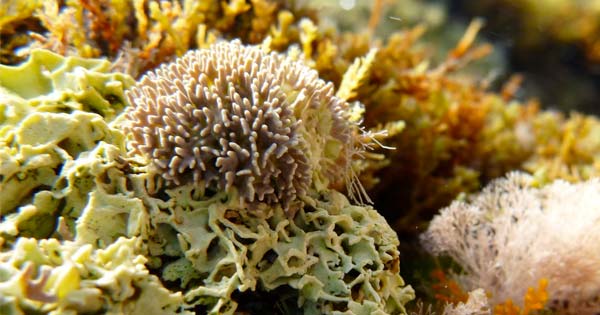
In the euphotic zone of the marine environments of the Mediterranean Sea, particularly in the tidal and wave-action zone and in the upper infralittoral, bio-constructing organisms have given rise to the “vermetid reef”, or reef: a limestone platform formed through the cementing process of the gastropod molluscs Dendropoma petraeum and Vermetus triquetrus, further consolidated by the presence of red algae (rhodophyta) such as Neogoniolithon brassica-florida and Lithophyllum lichenoides.
The vermetid platform is an important bio-structure typical of the Mediterranean Sea, in many ways similar to coral reefs, which plays a key role in shaping the appearance and ecological characteristics of rocky coastlines, creating tide pools that expand the space available to species, thereby boosting the biodiversity of associated species (where vermetid reefs are present, the coastal length increases by 2-3 times). In fact, over 400 associated species have been recorded, including algae, polychaetes, molluscs and fish.
By definition, a bio-construction is any built structure that rises from the seabed towards the sea surface, physically and ecologically altering the local environment.
A bit of history: In 1854, Monsieur de Quatrefages, a French naturalist on a study trip in Sicily, described a sort of trottoir (pavement/reef) that surrounded the coast of Torre di Isola, near Palermo, built by sessile gastropod molluscs of the Vermetidae family. After De Quatrefages’ account of his travels, a century passed before two other French naturalists, Roger Molinier and Jacques Picard (1954), redescribed the vermetid trottoirs for the same location.
In recent years, the ecology research group at the University of Palermo has taken up the French researchers’ work, describing both the main types of reef and the distribution of these structures along the Sicilian coast, assessing the ecological importance of the reef’s presence.
The importance of protecting the reef stems not only from the fact that it supports the growth of biodiversity, but above all because it turns out to be a good ecological indicator. The growth and structure of the vermetid reef is influenced by various environmental factors such as temperature, salinity, dissolved oxygen levels, surface hydrodynamics, pH variation, dissolved atmospheric CO2 concentration, and by human factors, such as trampling caused by using the reef as a stepping point for entering the sea.
It is therefore essential to properly raise awareness about the importance of the vermetid reef, so that people understand that it should not be seen as a “pavement” to stroll comfortably on, but as an important bio-indicator that must be protected.
There is a way to assign an economic value to every good and service that ecosystems provide free of charge to humans. Protecting the vermetid reef therefore has not only environmental value but also provides ecosystem services linked, for example, to food production (limpets and crabs) that supports the growth of associated marine species that feed on it, to coastal protection that counters erosion, and to increased tourism thanks to the landscape associated with it.
The role of the diver in protecting the aquatic environment is fundamental. Project AWARE brings together divers and sea enthusiasts to make a difference. Join us on an AWARE diving course:
Sign up for the PADI Project AWARE Specialist course; this diving course raises divers’ awareness of the issues facing our seas and oceans, and interactively gets us thinking about what we, divers and non-divers alike, can do in our own small way.
The PADI AWARE Coral Reef Conservation specialty diving course, on the other hand, will give you the chance to discover the fascinating world of coral habitats, also teaching you how to safeguard and protect them.
Want to make a difference actively, starting right now? Sign up for the PADI AWARE Dive Against Debris specialty course, thanks to which you’ll learn to recognise and safely remove marine debris during your dives.
Together we can make a difference! Join us and let’s protect the ocean planet and our Mediterranean Sea!
Related news