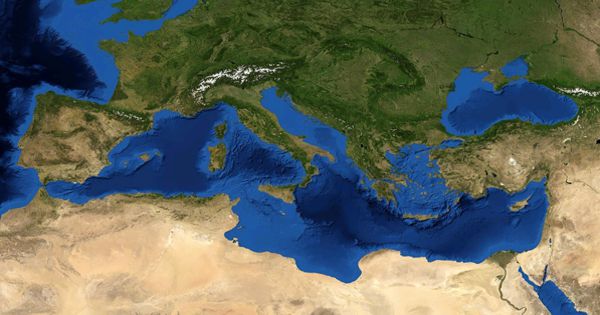
Diving in the Mediterranean is still not fully appreciated, and perhaps not very well known, worldwide. In Europe, I’d even say it’s underrated, often overlooked in favor of diving in other seas, such as the Red Sea. Divers often imagine that diving in the Mediterranean is boring, with little fish to see, and that the water temperature is often cold with poor visibility. But this isn’t always true — fortunately, the Mediterranean Sea offers many different scenarios depending on the season, and truly interesting realities that have nothing to envy in other, more frequented seas better known among divers worldwide. So, let’s see what diving in the Mediterranean, and specifically in Ustica, has to offer.
What divers often don’t know is that the Mediterranean Sea has the highest biodiversity of all the seas and oceans in the world. One truth is that the Mediterranean Sea has suffered greatly from the effects of overfishing in various locations. Fortunately, in recent years much more attention has been paid to this problem, and the Marine Protected Areas that have been established have strongly affected fishing and the preservation of underwater habitats, leading to a vigorous recovery of those sea areas that were once heavily compromised.
Ustica is a small island in the heart of the Tyrrhenian Sea, about 36 nautical miles from the Sicilian coast. It holds the title of “Italy’s first Marine Protected Area“. The sea around Ustica has been protected since 1986. This has resulted in strong attention over the years, with the result of achieving high biodiversity — about 60% of all marine life in the Mediterranean Sea. An increase in biomass, and the protection of many habitats typical of the Mediterranean Sea.
From large groupers, to huge amberjacks, clouds of barracuda in which a diver can lose themselves, to small colorful nudibranchs, octopuses, cuttlefish and colonies of shrimp that cover the walls and ceilings of the caves.
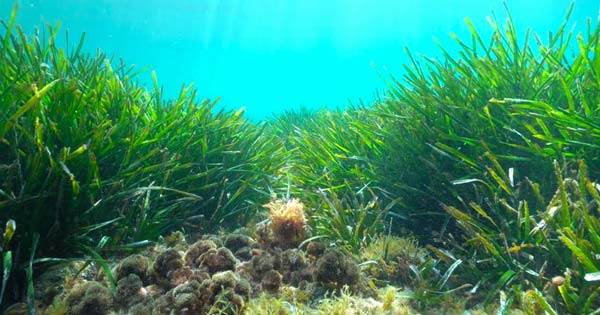
The volcanic origin of the island of Ustica has generated seabeds with very dramatic shapes, outlining a completely new underwater landscape at every dive site: from steep vertical walls, caves, arches, rubble seabeds, shoals, generating typical and unique habitats where a great many animal and plant species live. Another very important habitat found on the seabed of Ustica is characterized by immense green meadows of Posidonia oceanica, a marine plant that, besides its crucial role in photosynthesis, also serves as shelter for many fish species.
Fans of gorgonians are found at several sites, particularly those most exposed to the current. Another interesting habitat is the presence of a wreck, which can also be visited by newly certified Open Water Diver divers. The seabed of Ustica is anything but monotonous and uniform.
The volcanic origin, the rocky seabed, and the presence of light currents mean that visibility at Ustica is among the best in the Mediterranean. Divers can enjoy underwater panoramas, beautifully lit by sunlight filtering through the water column down to great depths.
Another unique characteristic of diving in Ustica, and in the Mediterranean in general, is history. The Mediterranean is a great underwater museum, especially in Sicily: Punic wars, Roman ships, Phoenicians, Arabs, have scattered the seabed with cannons, amphorae, anchors. And since Ustica was a mooring point used by ships as a refuge, there are many interesting archaeological finds to see underwater.
In summary, Ustica is just a small Sicilian island that has a lot to offer diving enthusiasts: walls, caves, wrecks, ancient amphorae and anchors, and abundant life, from tiny shrimp to large pelagic fish. And all this with wonderful visibility and pleasant temperatures, reaching 30 °C in summer. And we haven’t even talked yet about what Ustica offers above the water’s surface…
Dutch dive fair online “Duikvaker” on February 6 and 7.
Related news